Flutes
36
Field note · texture study
The TP1 radio's control knob got a side texture, then an adversarial review. Here are five printable alternatives — each shown three ways: an AI beauty shot (gpt-image-2), an accurate CAD render, and a live 3D model you can spin. All five carry the same keyed friction D-bore for the KY-040 Ø6 shaft.
First, a correction: it isn't a knurl (a cross-hatched diamond). It's straight vertical reeding. The shipped knob (variant A) has 36 fine scallops — and the numbers put it right at the edge of what FDM can hold.
| Finding | Detail |
|---|---|
| Lands at the resolution floor | Ridge crests are 0.82 mm ≈ 1.9 nozzle widths. They print as ~2 rounded perimeters — the crisp machined edge in the render won't fully survive; it reads soft. |
| Shallow grip | Scallops are only 0.9 mm deep. Fine for a light volume knob; marginal for the only control (rotate + push). |
| "Knurled" overclaims | Docs say knurled; the geometry is reeding. A true diamond knurl prints worse on FDM (rounded blobs + 45° overhangs) — not recommended. |
| Aesthetic drift | 36 reeds at 2.6 mm pitch reads "vintage coarse," not "fine precision." Going finer for a premium look makes lands thinner → worse on the printer. Resolution caps how fine you can credibly go. |
Vertical reeds run along the build axis → zero overhang, the cleanest print orientation; and the 1.2 mm smooth bottom rim keeps elephant-foot off the texture. Good calls — kept in every variant below.
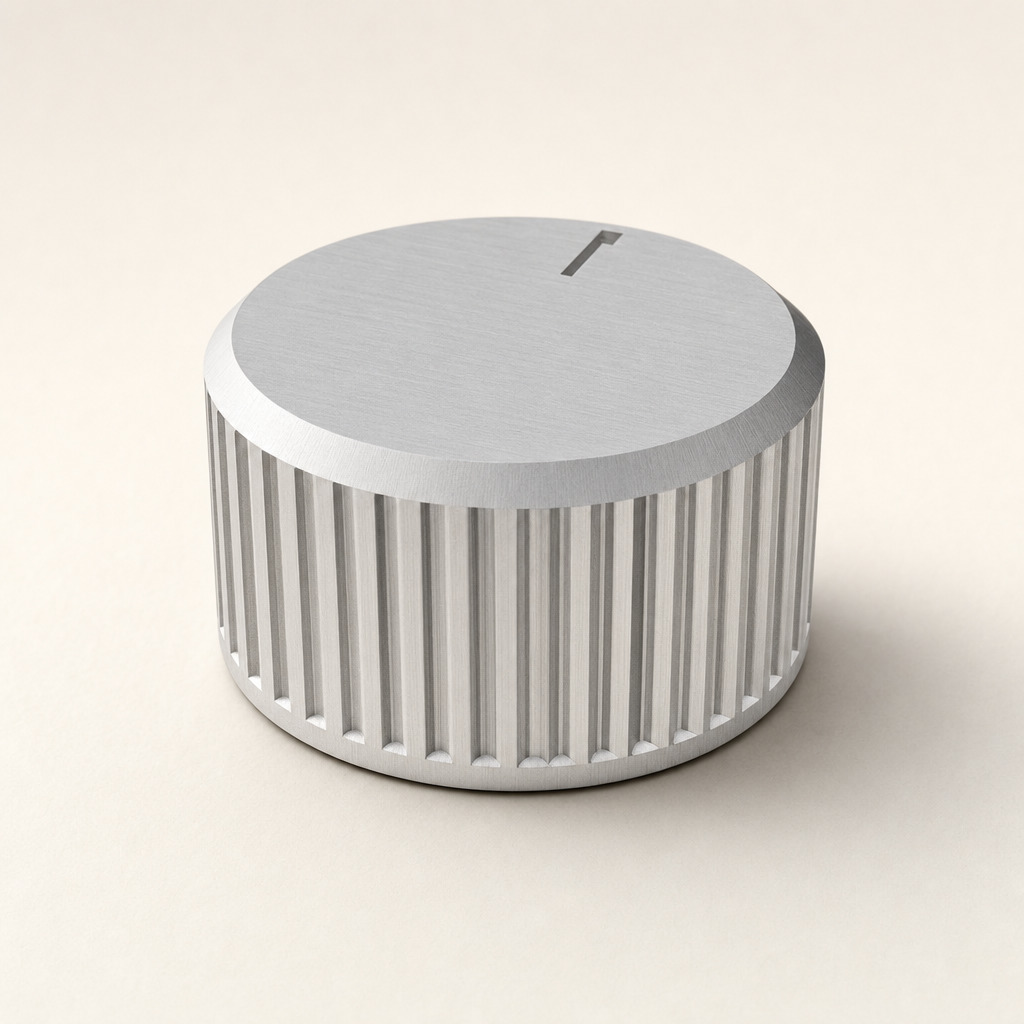
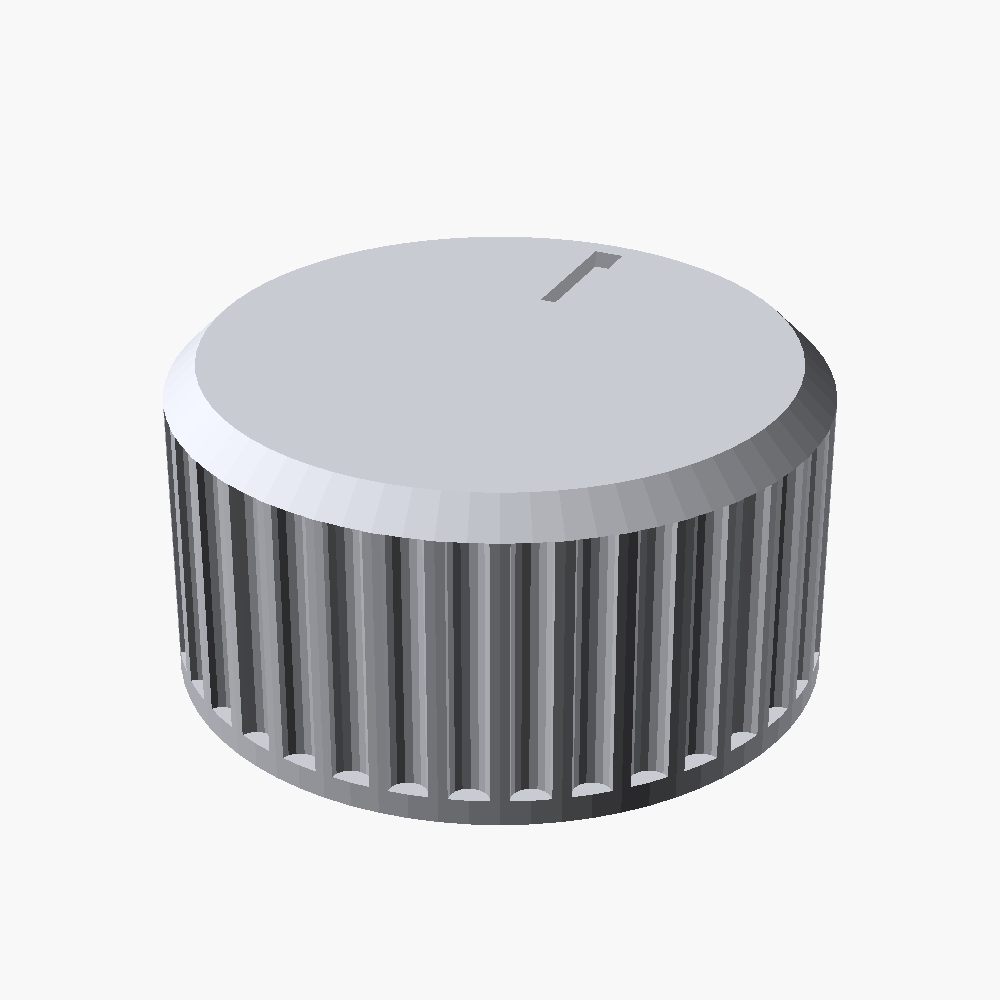
The current part. Reads great on screen; off the printer the thin lands round over, so it lands softer and slightly "gear-like" rather than precision-machined. Acceptable — but the option most likely to disappoint.
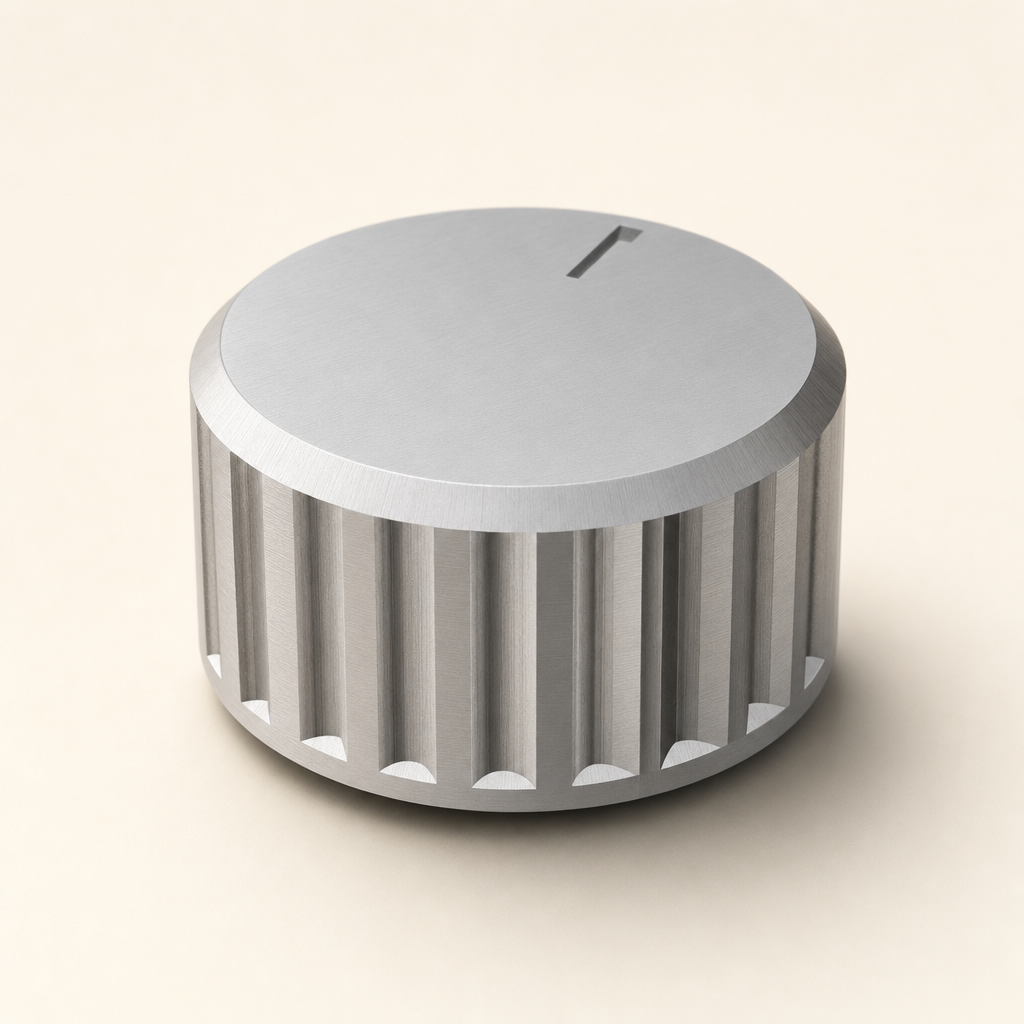
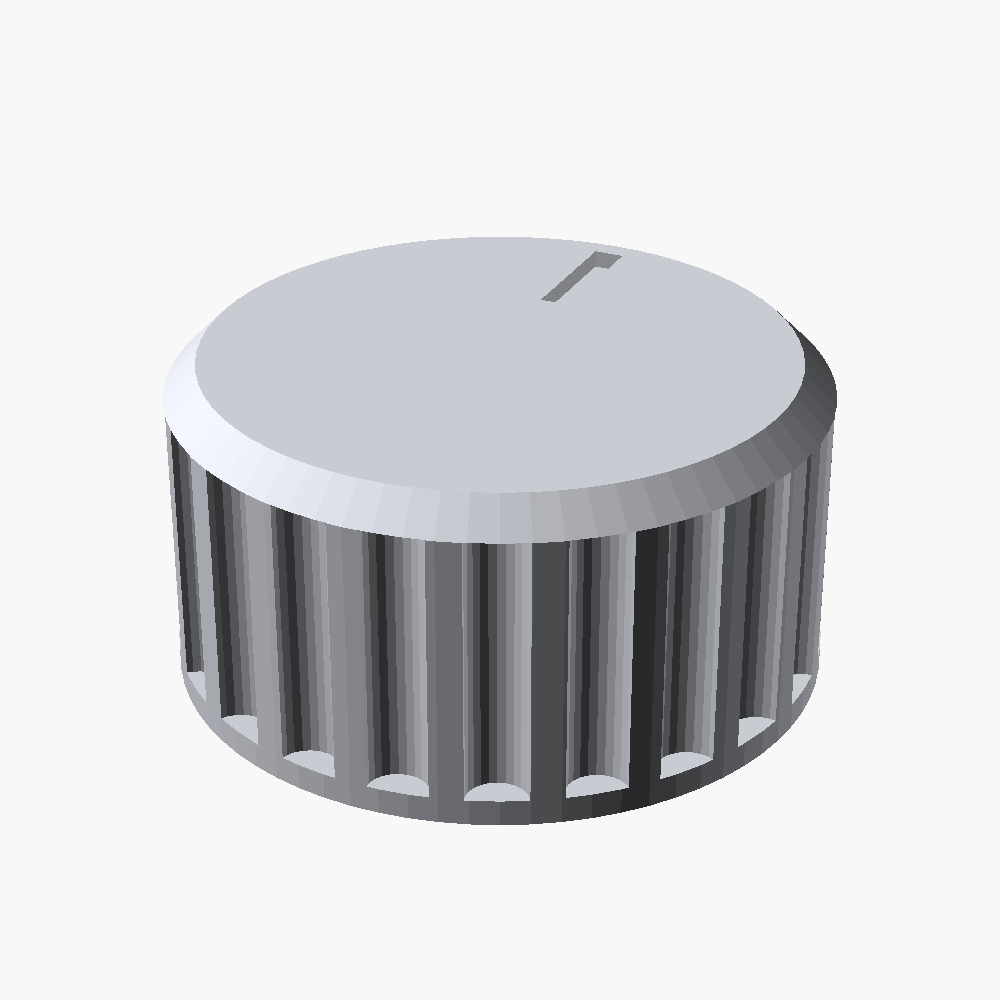
Fewer, bolder, deeper reeds. Lands are well above the nozzle so they stay crisp; the deep flutes grip. Reads industrial-playful (guitar-amp / Chemex). The most print-honest option.
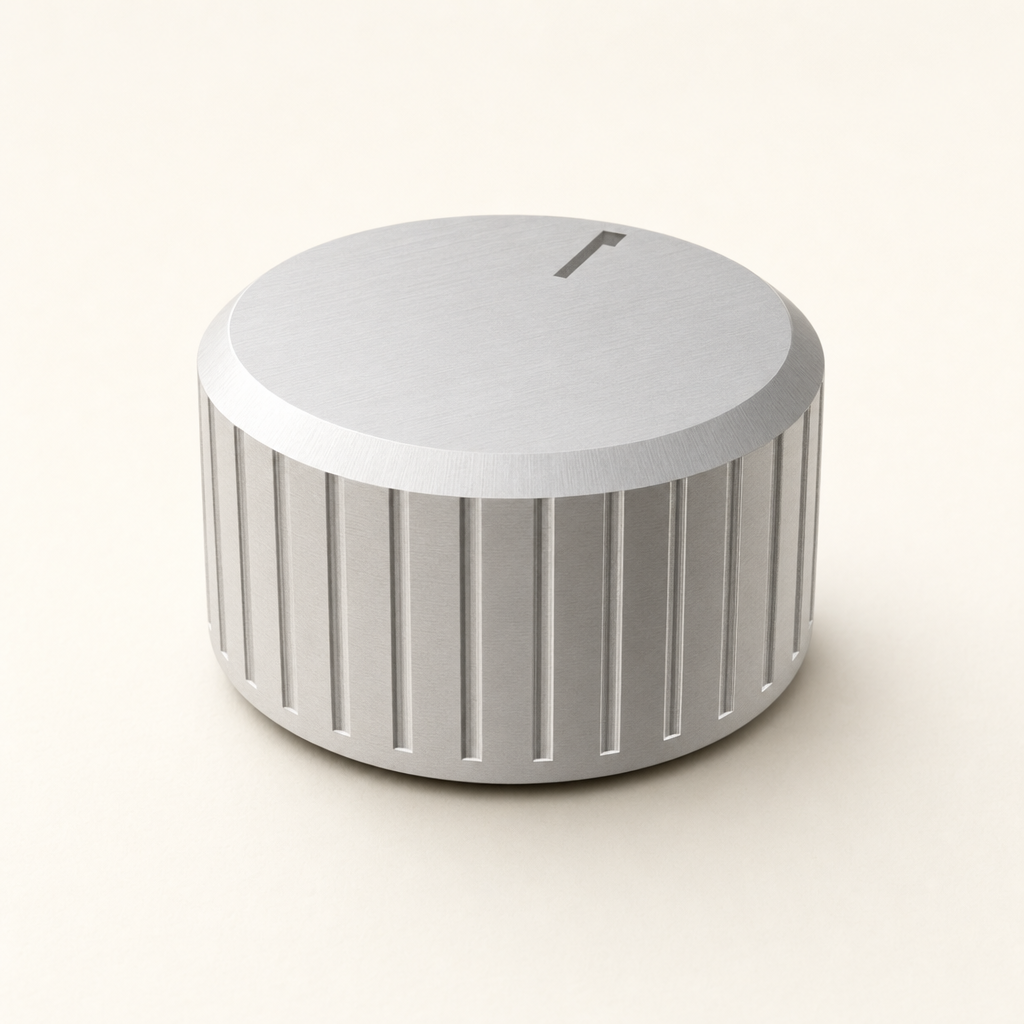
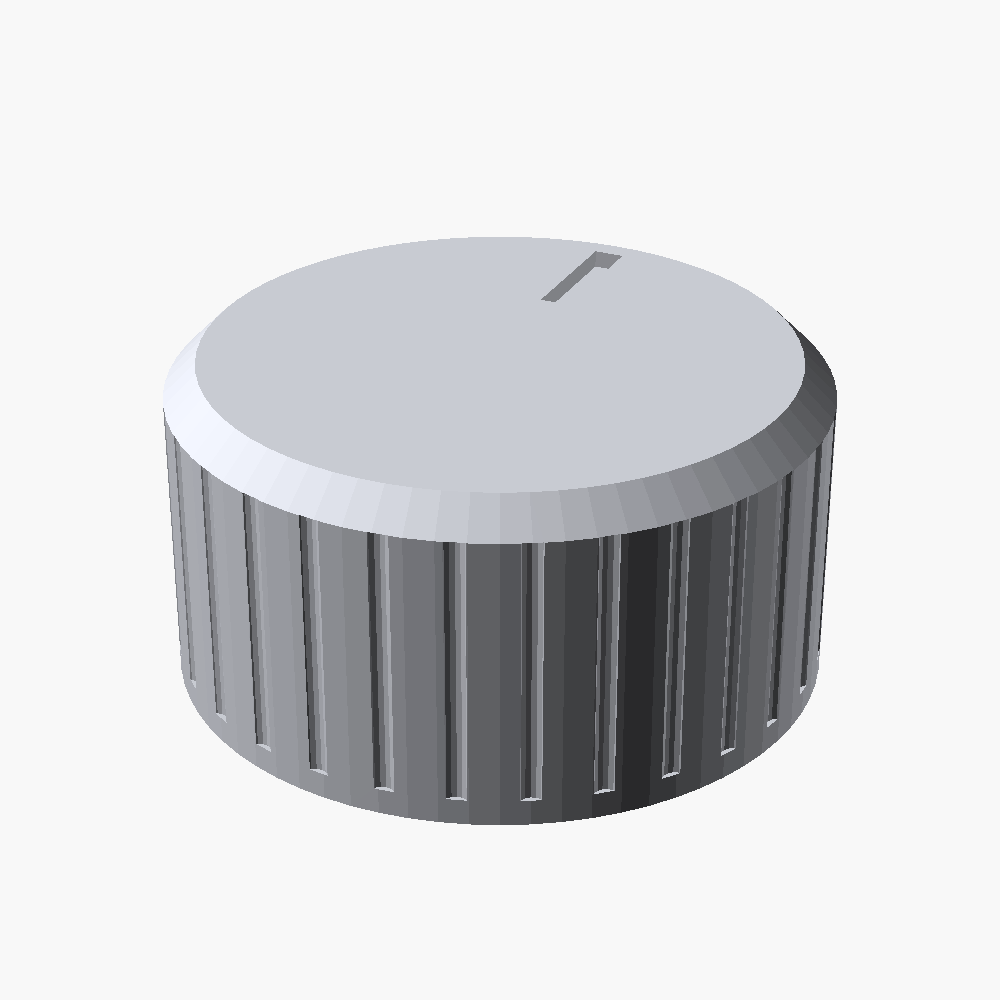
Narrow grooves separated by wide flat lands — the lands are 5+ nozzle widths, so they print dead crisp. The best "fine precision aluminium" read that FDM can actually hold without going mushy.
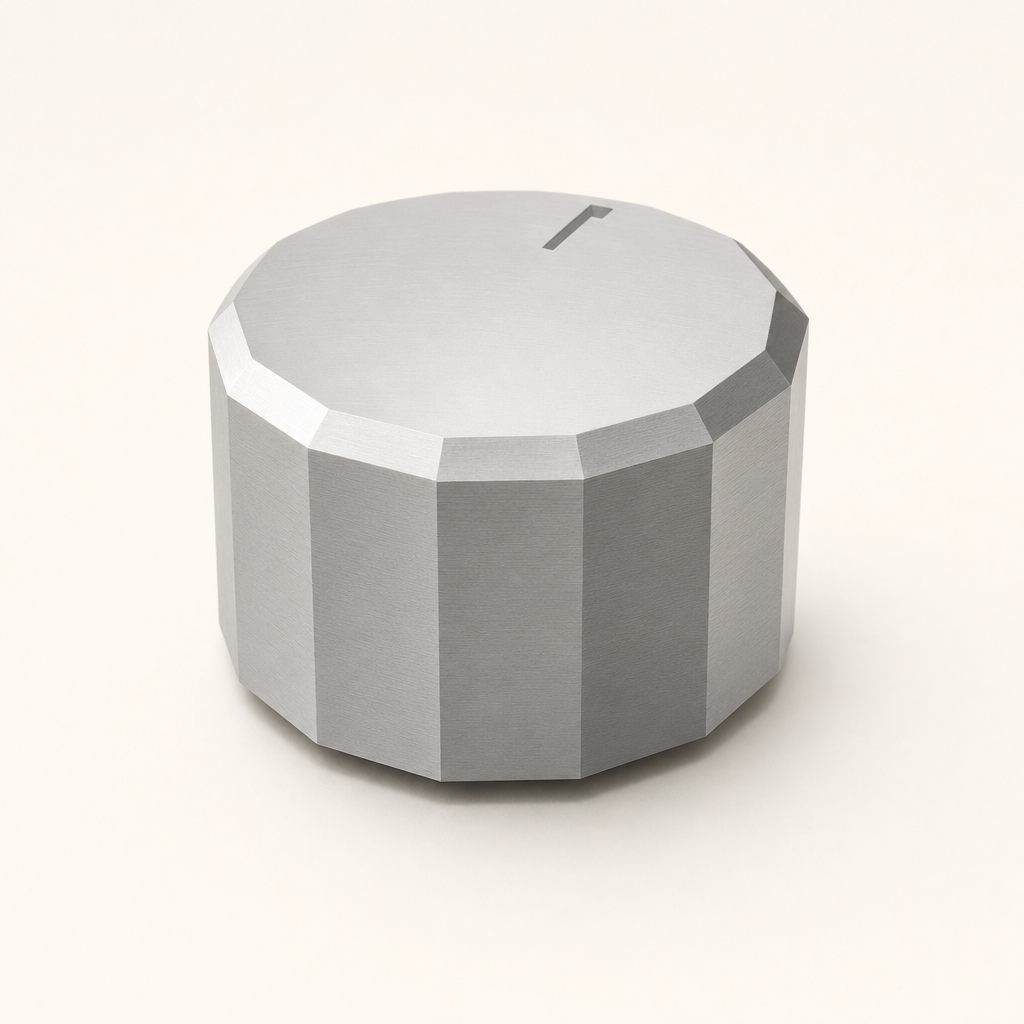
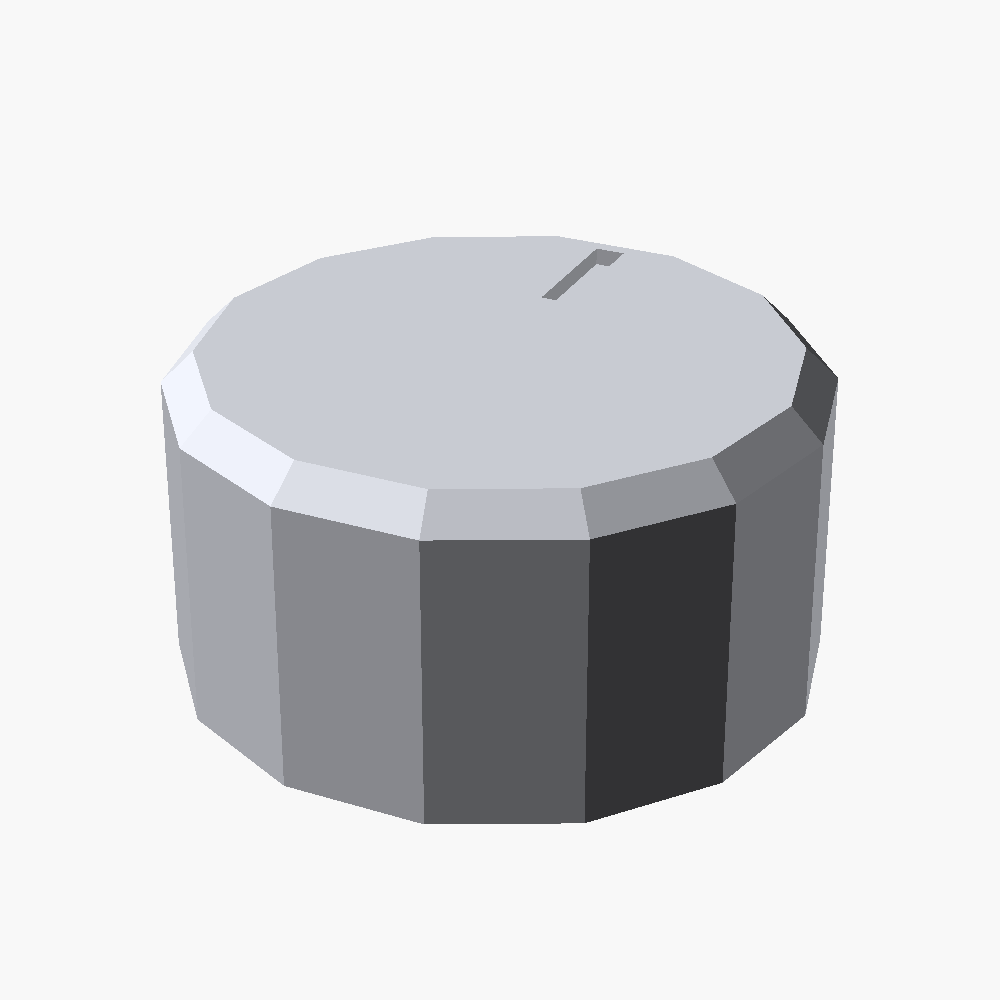
Flat faces instead of texture — nothing thin to lose, so it prints flawless. Reads minimal and instrument-like; distinctly Teenage Engineering. The zero-risk choice if "radio knob" isn't a must.
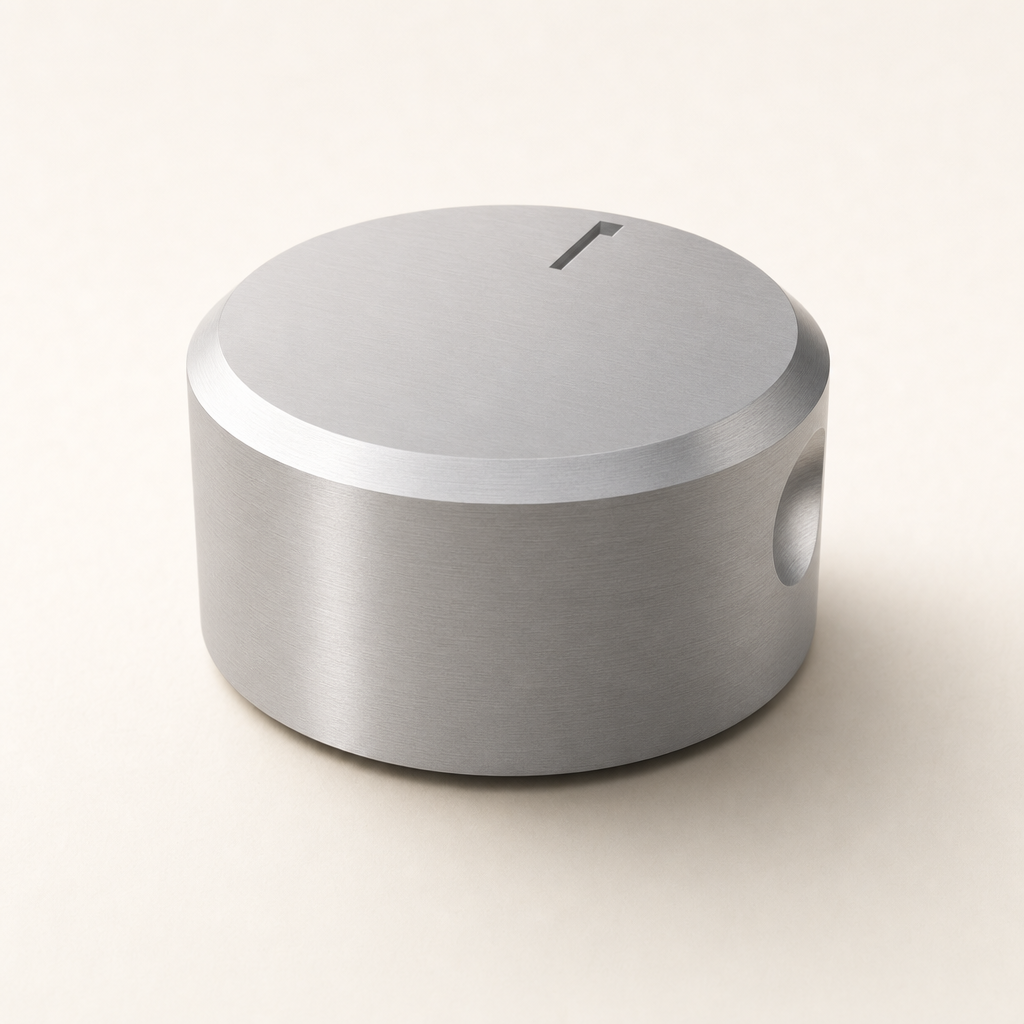
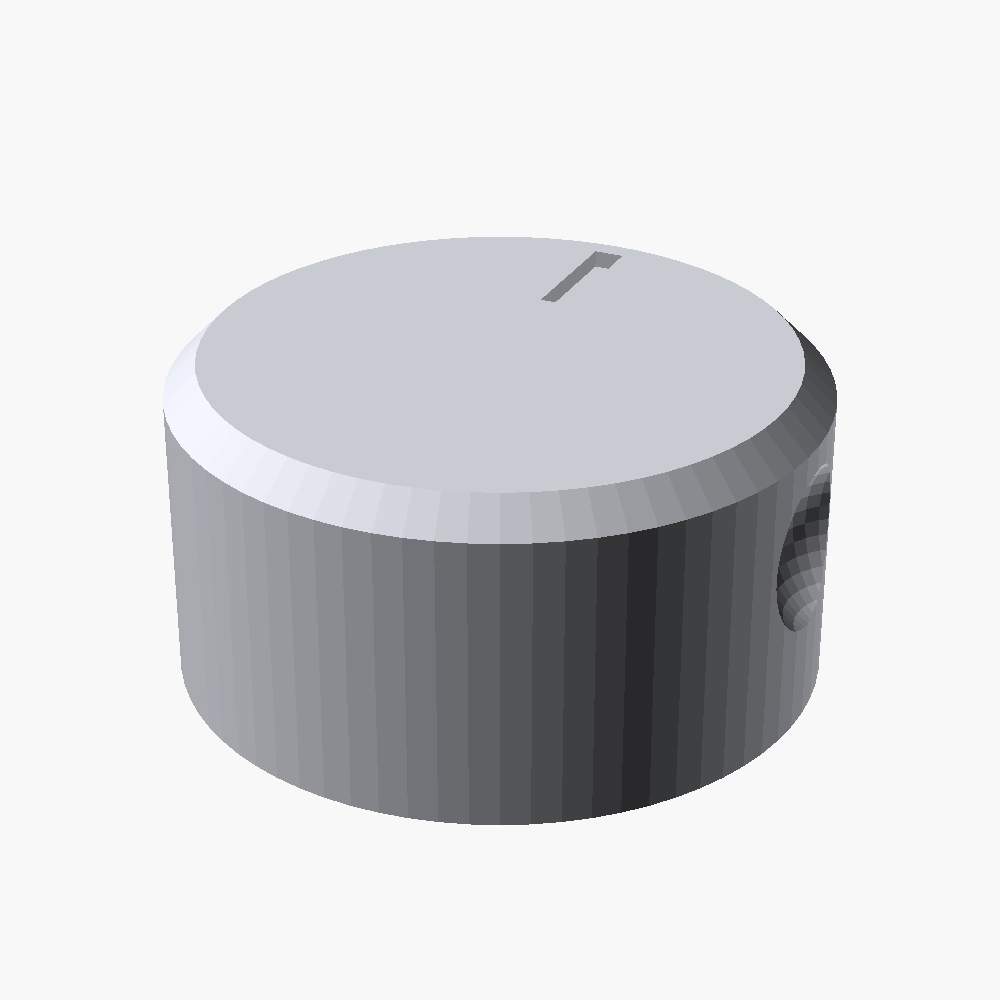
The quiet, premium option: smooth sides, two finger dishes for purchase. Honest caveat — the dish tops are the one mild overhang in the set, so this is the only variant that may want a touch of support.
The shipped A is fine, but it's the one most likely to disappoint off the printer. Each swap is a ~10-minute change: texture params → re-export → redeploy.